

K9 Training Exercise Scenarios
PACKTRACK Team
27 November 2021
0
min read
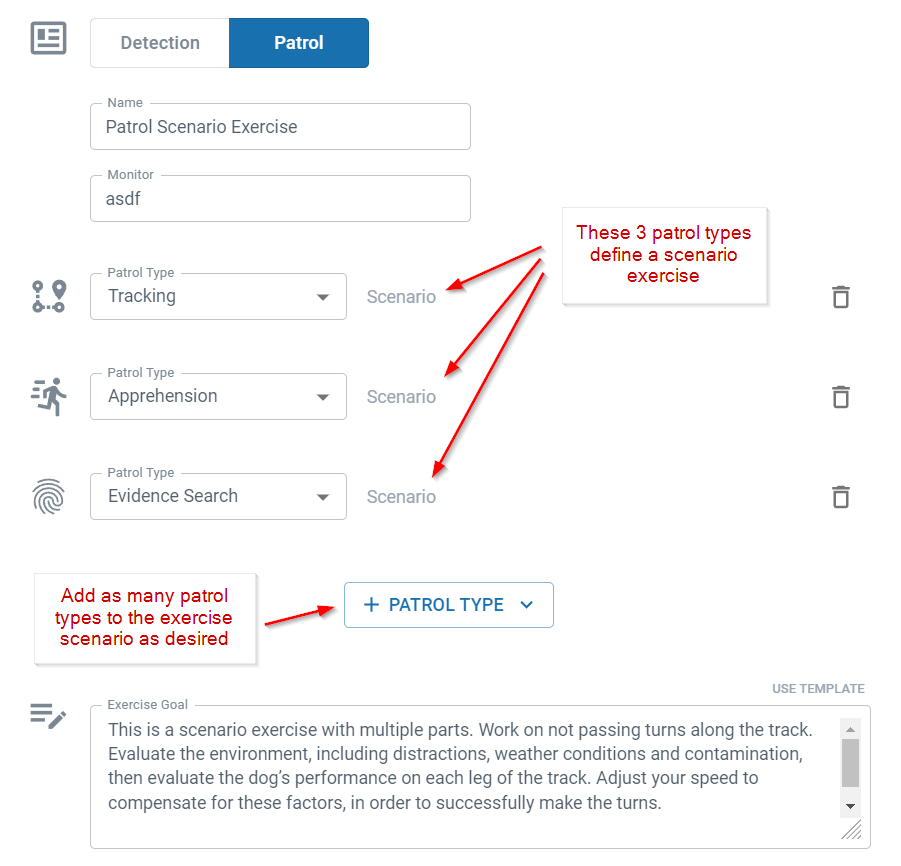
With our latest update you can now create scenario-based training exercises for your K9. A scenario exercise includes several types of patrol training in one focused exercise. The goal is teach the dog to transition back and forth between each skill within a short period of time. This helps you to more accurately replicate real life work as a K9 team. For example, you might switch from an area search to a building search and then to a track in one training scenario. Creating a scenario exercise is easy. Use the + PATROL TYPE button to add each type to the exercise definition.
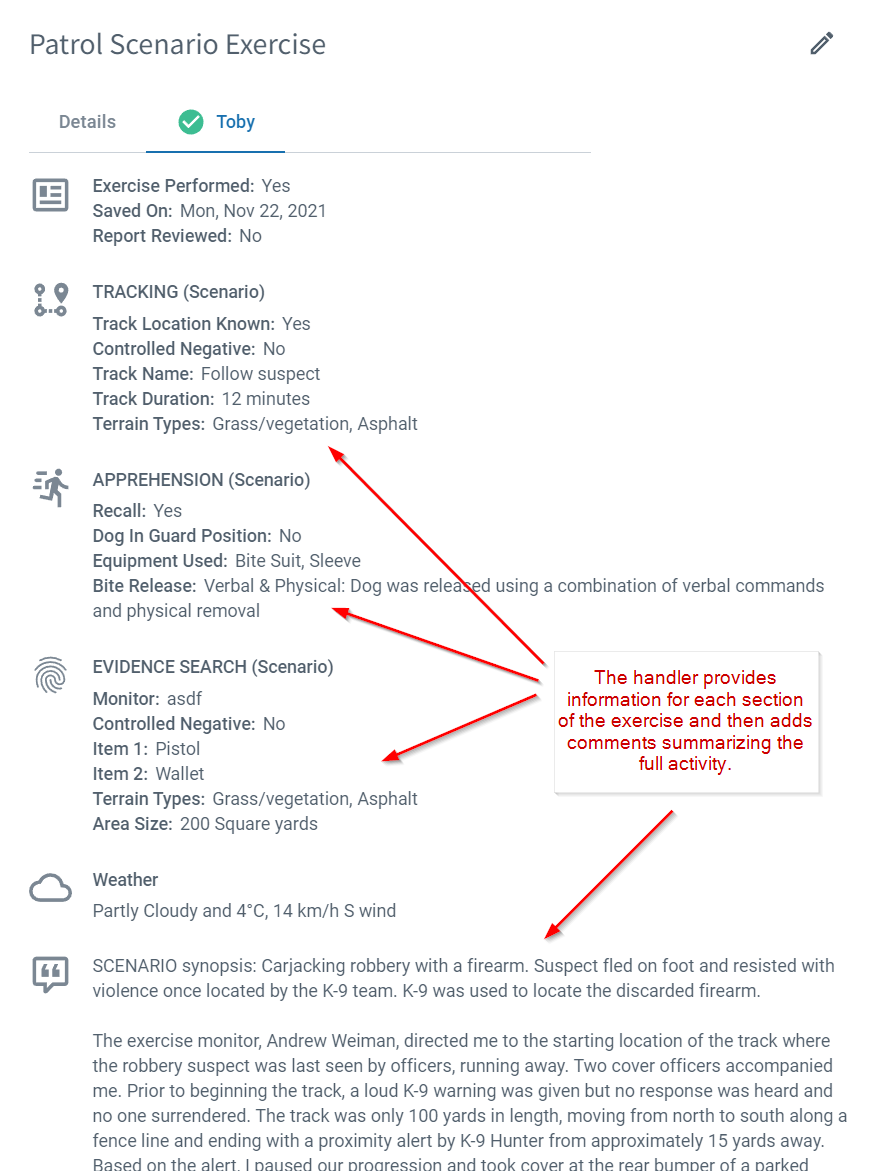
When handlers later complete this multi-part exercise they only need to write their comments on the training outcome in one place to summarize all activities.
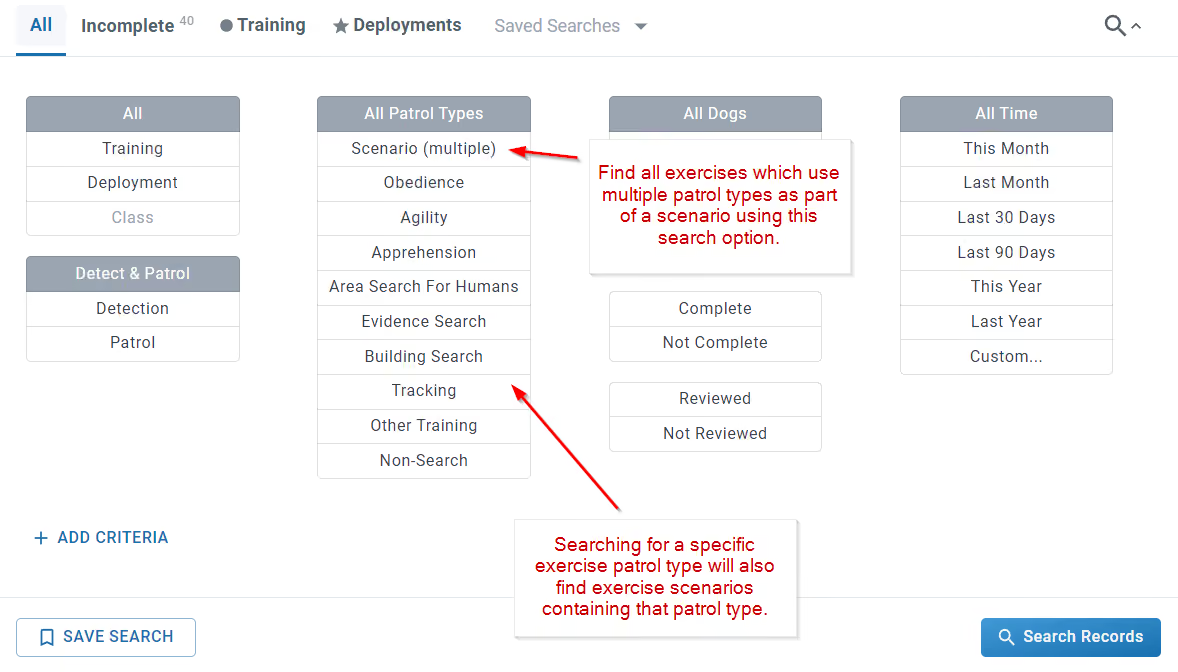
You can also specifically search for multi-type scenario records in the search form.
Here's an example of how you might write up your comments for a scenario exercise.
SCENARIO synopsis: Carjacking robbery with a firearm. Suspect fled on foot and resisted with violence once located by the K-9 team. K-9 was used to locate the discarded firearm.
The exercise monitor, Andrew Weiman, directed me to the starting location of the track where the robbery suspect was last seen by officers, running away. Two cover officers accompanied me. Prior to beginning the track, a loud K-9 warning was given but no response was heard and no one surrendered. The track was only 100 yards in length, moving from north to south along a fence line and ending with a proximity alert by K-9 Hunter from approximately 15 yards away. Based on the alert, I paused our progression and took cover at the rear bumper of a parked work truck and began to survey the immediate area for threats. I allowed K-9 Hunter to move forward to the end of his 20 ft tracking lead to cast for airborne odors. K-9 Hunter again began to bracket with his head up, cast along the soft air currents that were flowing into his direction from in front of us. K-9 Hunter targeted a garbage container and barked as an alert to the presence of the hiding suspect. Another K-9 warning was given to the unseen and still hidden suspect. The suspect ran from his hiding place at the opposite side of the garbage container and K-9 Hunter was released with the apprehension command. There were no issues with the dog’s tracking. K-9 Hunter chased the suspect down and bit the hidden sleeve on the decoy’s right arm, holding on until I ran up to aid in the apprehension. I ordered the suspect to stop resisting and to stop kicking the dog as I performed two knee strikes and a leg sweep on the left leg of the suspect to take him to the ground. I ordered my cover officers to take control of the suspect’s legs and left arm as I took control of K-9 Hunter. K-9 Hunter was given one verbal command to release the bite as I applied e-collar stimulus simultaneously to the voice command. K-9 Hunter responded instantly and affirmatively to the verbal and physical command to release. Once we moved back to the starting location of the track, I was informed by the monitor, Andrew Weiman, to walk across the street and meet with monitor Aaron Petermen. I was informed that the suspect had discarded a pistol and a wallet and I was to perform an area search for the evidence. I removed the tracking harness and long lead from K-9 Hunter, and gave him the command to search the open grassy area for evidence. K-9 Hunter was able to locate and move into a down position in front of the pistol in approximately 40 seconds. I called K-9 Hunter to a heel position and Monitor Aaron Peterman covered the pistol with a traffic cone. I commanded the K-9 to search the area again and he was able to locate the wallet in about 2 minutes of searching and about 20 yards from the pistol. K-9 Hunter moved to a down position with the wallet in front of him and he mouthed the wallet, throwing it up into the air, at which time I verbally corrected him and commanded him back into the down position at the wallet. The K-9 was called to a heel position and redirected to search again, to reinforce the down command on the article and to not molest the evidence. I verbally corrected the dog when he got too close to the article with his mouth and he avoided touching it. I called him to the heel position and leashed him. As we walked away, in a heel, I rewarded the dog with a toy and game of tug. We hope you find this new feature addition helpful. If you have any feedback on this update or anything else then please reach out and let us know.
PACKTRACK Team
27 November 2021
0
min read
Stay up to date
Get new PACKTRACK articles and occasional product updates.
You can unsubscribe anytime.
More articles from the PACKTRACK blog
System Update
0
min read
Updates to Streamline Your Records
We’re always working to make PACKTRACK faster and more user-friendly for handlers, trainers, and supervisors. Today, we’re excited to highlight several new improvements designed to save you time and improve communication across your team.
We’re always working to make PACKTRACK faster and more user-friendly for handlers, trainers, and supervisors. Today, we’re excited to highlight several new improvements designed to save you time and improve communication across your team.
Attach Documents to Events and Exercises
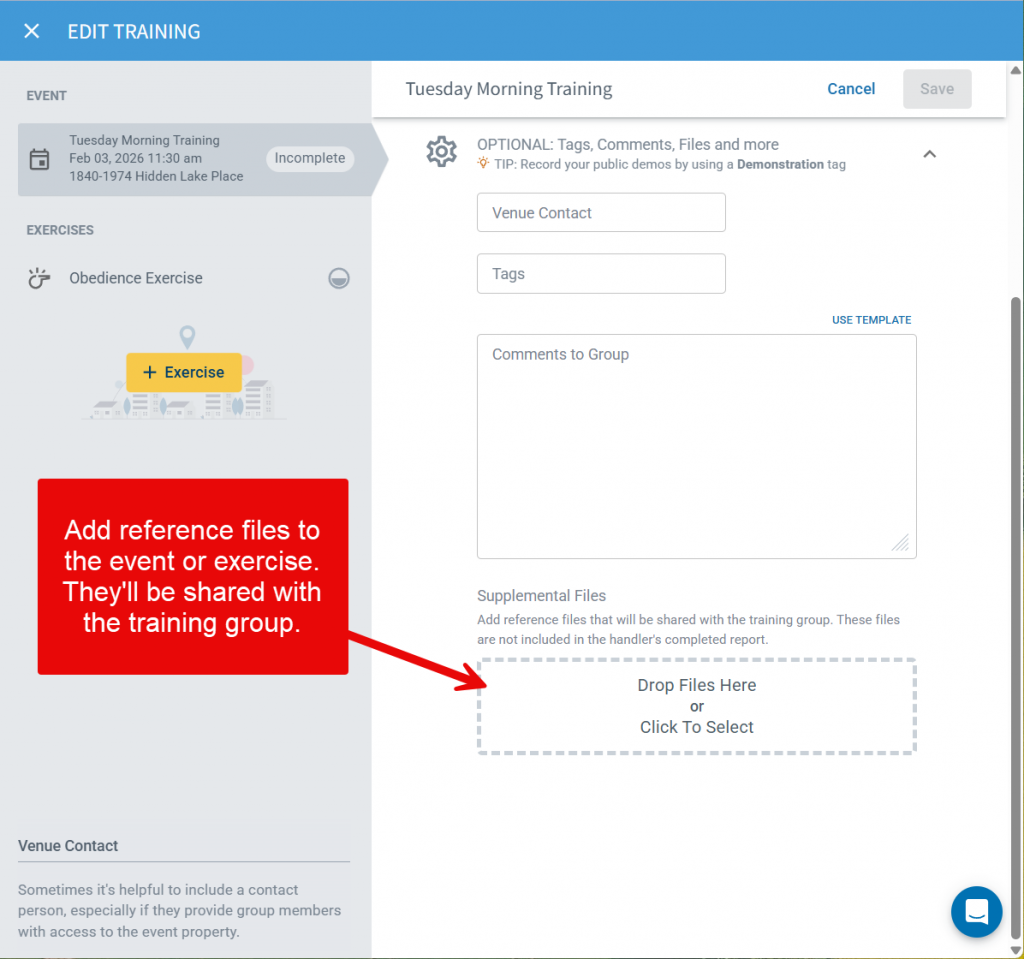
You’ve always been able to upload documents to individual exercise completions — but now you can include them directly in Events and Exercise definitions as well. This update gives handlers and trainers more flexibility to provide supplemental materials such as training outlines, reference documents, maps, diagrams, etc. Adding documents at the event or exercise level ensures everyone starts with the same information and supports more consistent, well-documented training.
Faster Data Entry with Autocomplete Locations
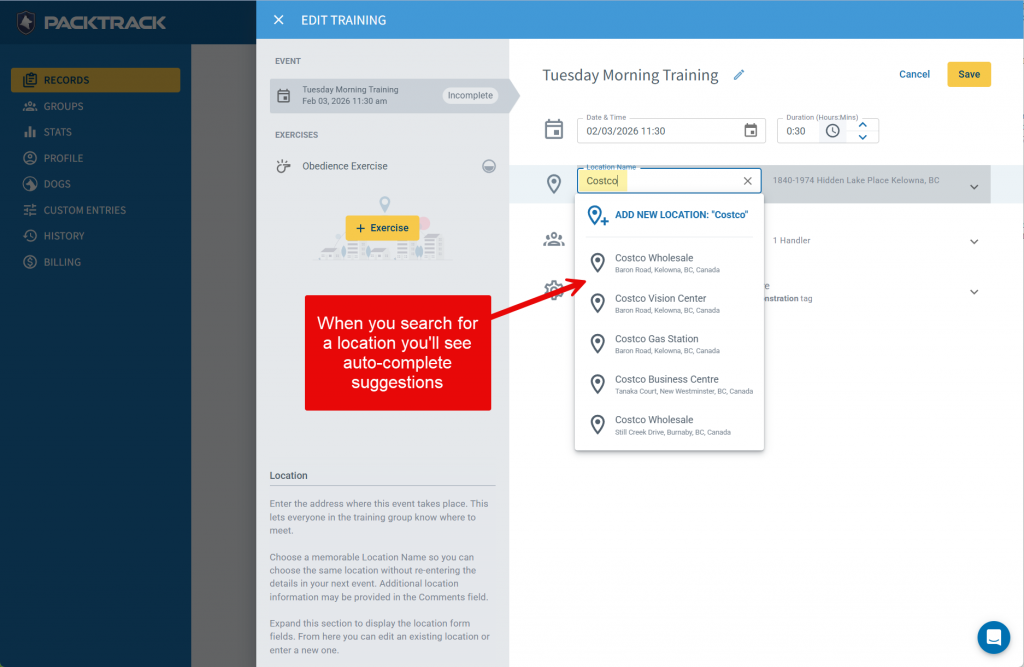
Recording where an event or deployment occurred is now even faster. PACKTRACK’s training and deployment forms now include Google-powered location autocomplete. Just start typing a name or address and nearby matching suggestions will appear. Select the correct option, and PACKTRACK will automatically fill in the relevant location fields for you. This means less typing, fewer mistakes and more accurate location data.
Supervisor Notifications for Completed Records
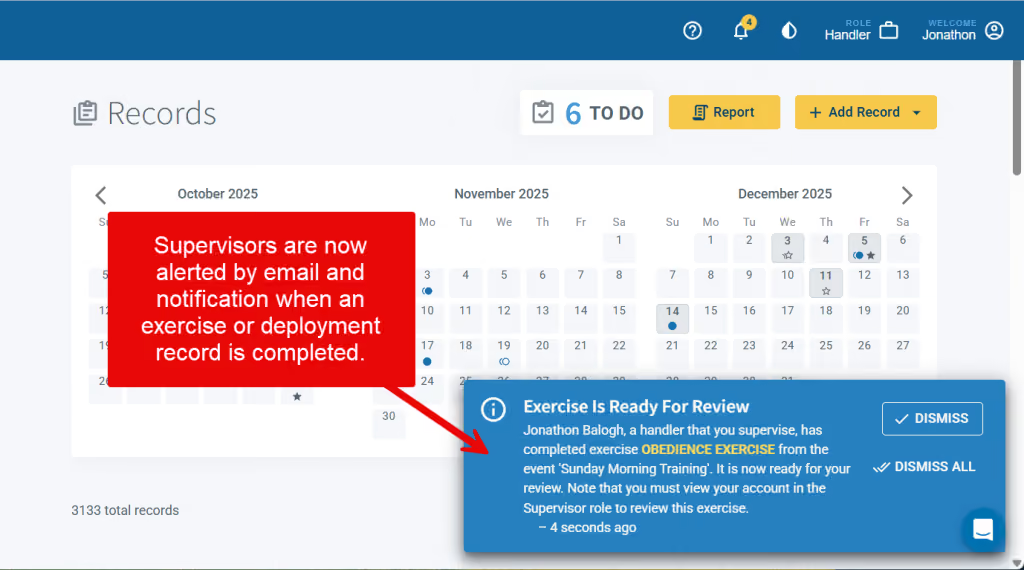
Supervisors can now choose to receive notifications whenever a handler they oversee completes a training or deployment record. This gives them a heads-up to review the new records. Notifications are sent by email as well as within PACKTRACK, keeping supervisors informed without requiring constant manual review. Supervisors can configure their preferences in the Notifications section of their Profile page, choosing whether to receive training record completion alerts, deployment record completion alerts or both. Note that these alerts are off by default. This feature enhances accountability and ensures important activity never gets overlooked.
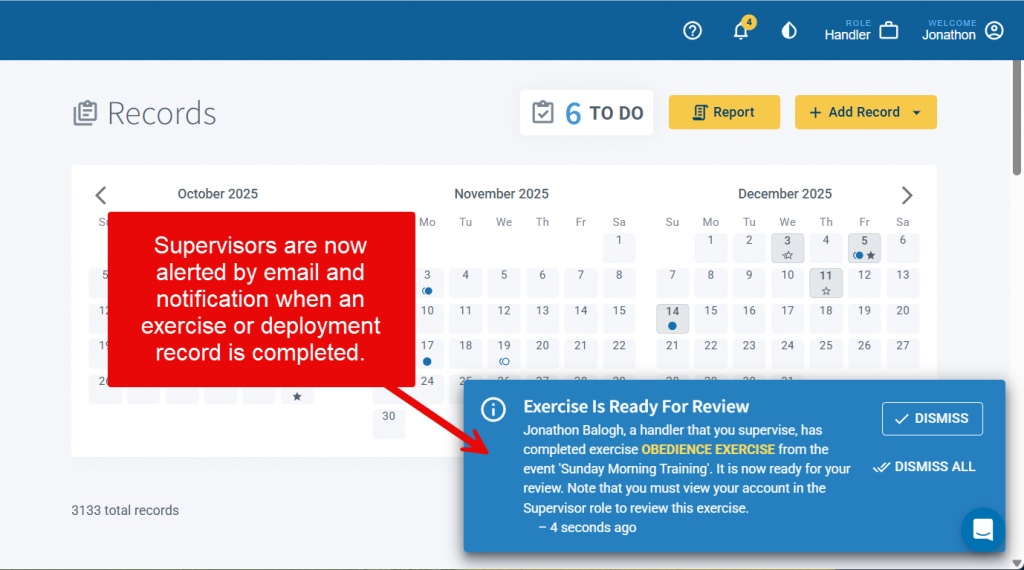
Cleaner, More Modern Email Styling
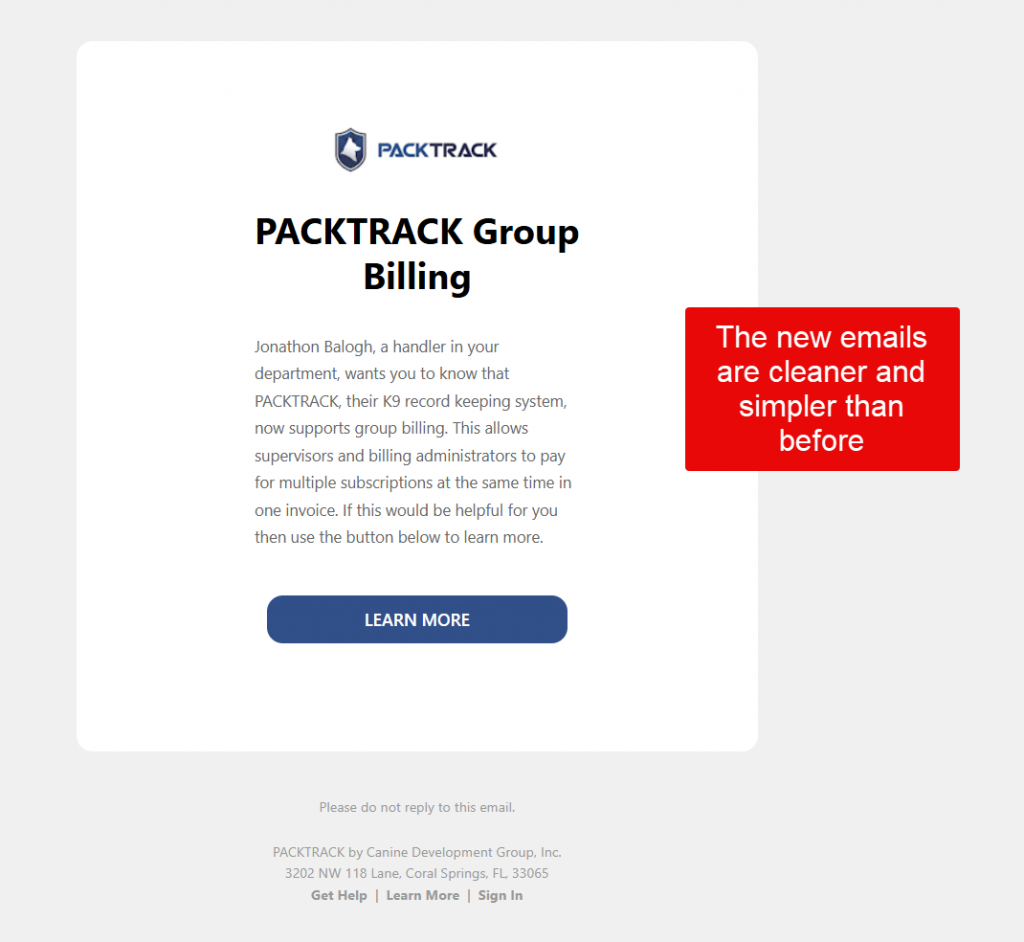
PACKTRACK emails just got a major upgrade. All system emails are now sent using clean, modern looking HTML formatting — with improved colors, visual hierarchy, and clear action buttons. These updates make PACKTRACK emails easier to read and quicker to act on, whether you're on your phone or desktop.
Share the News About Group Billing
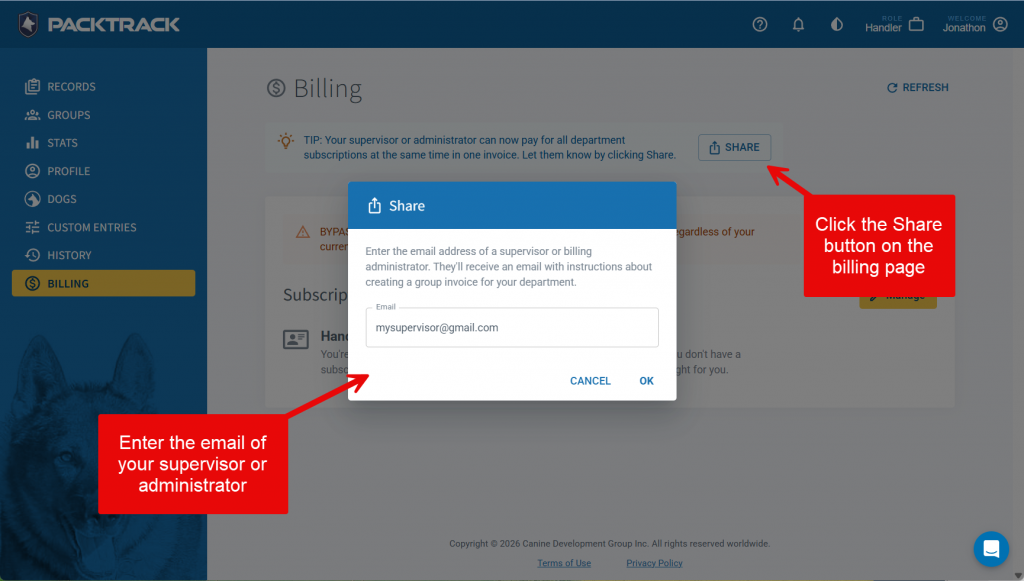
As of a couple months ago, your supervisor or administrator can use the new Group Billing feature to pay for all department subscriptions at the same time in one invoice. We now make it easy to share this feature with others. Visit your Billing page, click the Share button and then enter the email address of anyone in your department that should know about this. They'll get an email with a link to our Group Billing help article.
These features are part of our ongoing effort to make PACKTRACK the most intuitive K9 record-keeping platform available. As always, we welcome your feedback and look forward to sharing even more updates soon. If you haven’t explored these new features yet, log in and give them a try!
System Update
0
min read
Group Subscriptions
Managing multiple K9 handler subscriptions just got a whole lot easier. We’re excited to announce our newest feature - Group Subscriptions - designed to give department billing managers complete control over their team’s subscriptions, all under a single account.
Managing multiple K9 handler subscriptions just got a whole lot easier. We’re excited to announce our newest feature - Group Subscriptions - designed to give department billing managers complete control over their team’s subscriptions, all under a single account.
One Invoice, One Account, Total Control
With Group subscriptions, billing managers can now pay for and manage the subscriptions of multiple K9 handlers together. No more juggling individual invoices or tracking down renewals across separate accounts. Everything is streamlined into one centralized billing dashboard. Managing your team’s subscriptions is simple and flexible. First, invite the handlers in your department to join your group subscription. Next, purchase a license with the desired number of seats. That's it! If handlers join or leave the department, you can easily add, remove, or reassign seats at any time.
Why It Matters
For agencies with multiple K9 handlers, managing subscriptions individually can be time-consuming and confusing. Group subscriptions eliminates that friction, offering:
- Simplified billing – One invoice covers your entire team.
- Flexible management – Add or remove handlers as your team changes.
- Better oversight – Track your active users and seat usage in one place.
Step by Step Guide
Step 1: Get the Billing Manager role
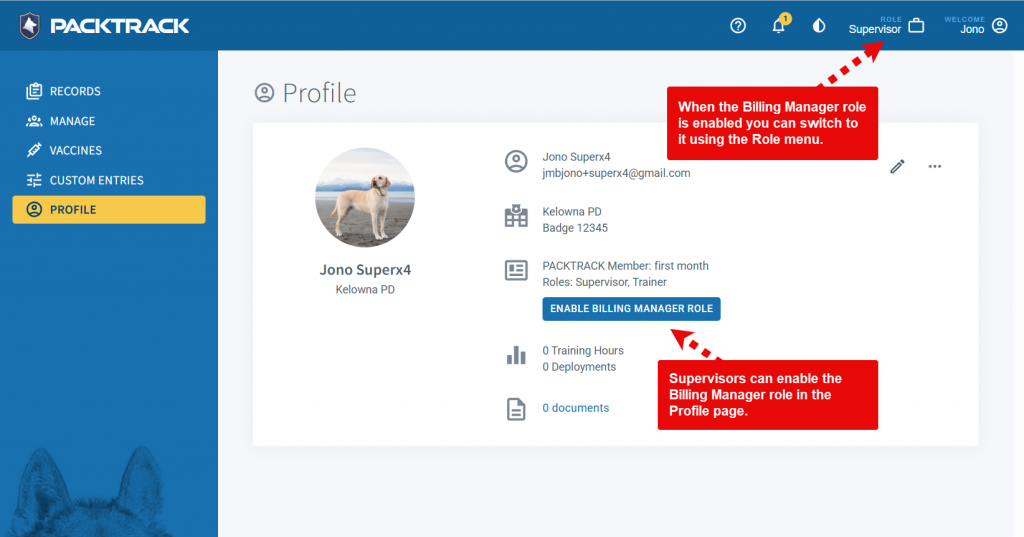
To access the group subscription feature you need to use the new Billing Manager role. A billing manager can be a handler, supervisor or administrator that's responsible for ensuring that everyone in the department has an up to date subscription. Only one person needs to do this for the department. You may select this role at
registration or, if you're currently a supervisor, then you can add the Billing Manager role from your Profile page. You may also ask for the role to be added to your account using our support chat.
Step 2: Choose handlers to be managed
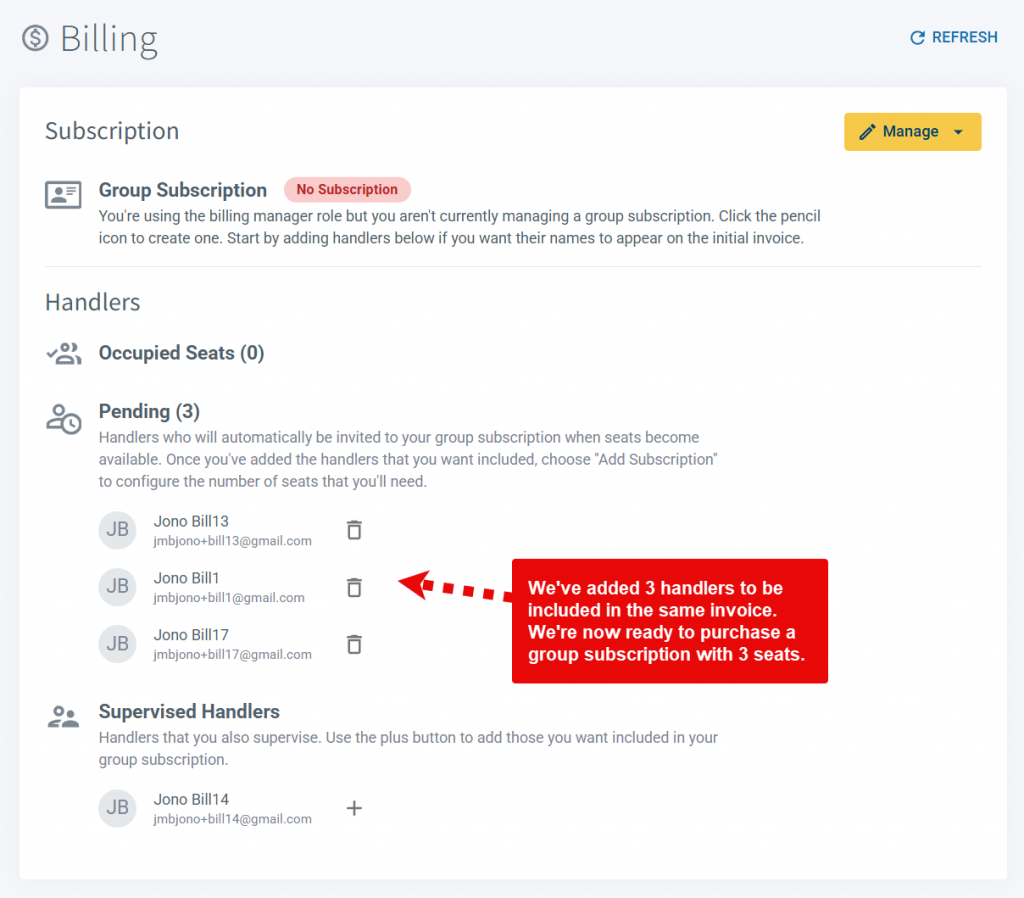
Switch to the Billing Manager role and choose the Billing tab. Here, you'll add the handlers that you want to include in your group subscription. Note that your invitations are queued in the Pending list and will be sent later. The goal is simply to identify the handlers that you want to be covered.
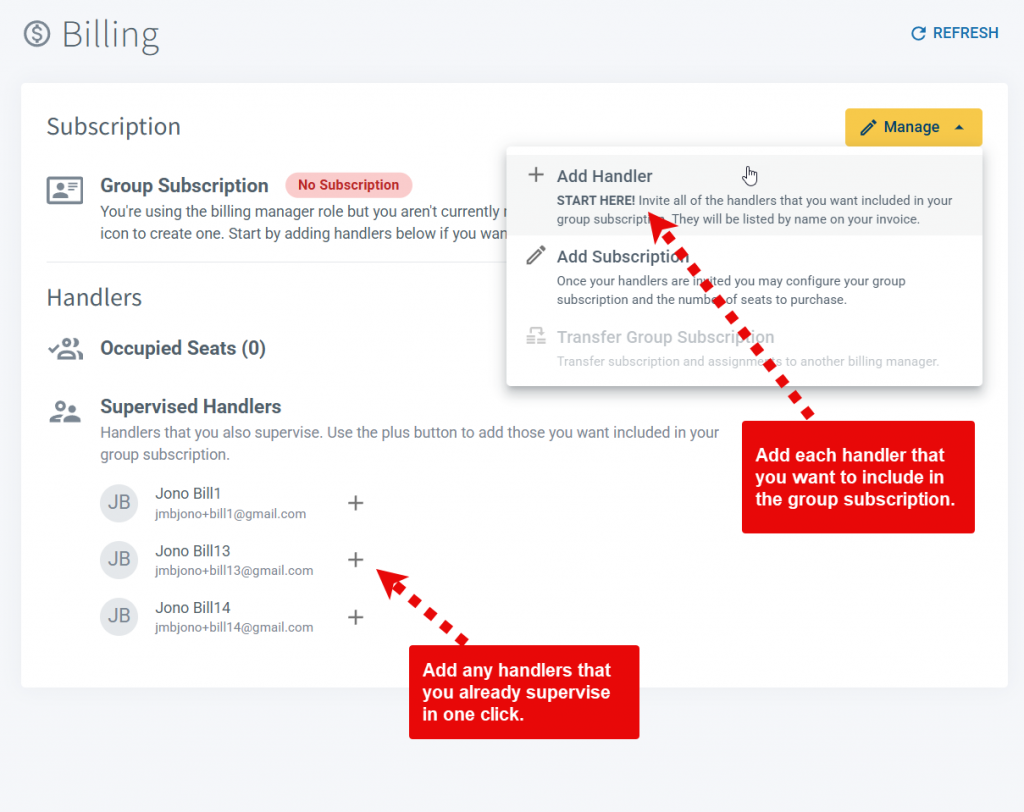
Use the Add Handler option in the Manage menu to provide the email address for each handler. If you already supervise handlers then they can be added by clicking the plus button next to their name in the Supervised Handlers list. If you add a handler that isn't a PACKTRACK member then they will receive an email asking them to sign up. This is a great way to onboard the handlers in your department with the PACKTRACK service. When they complete the registration they'll automatically be queued in the Pending list to be included in this group subscription.
Step 3: Purchase a group subscription
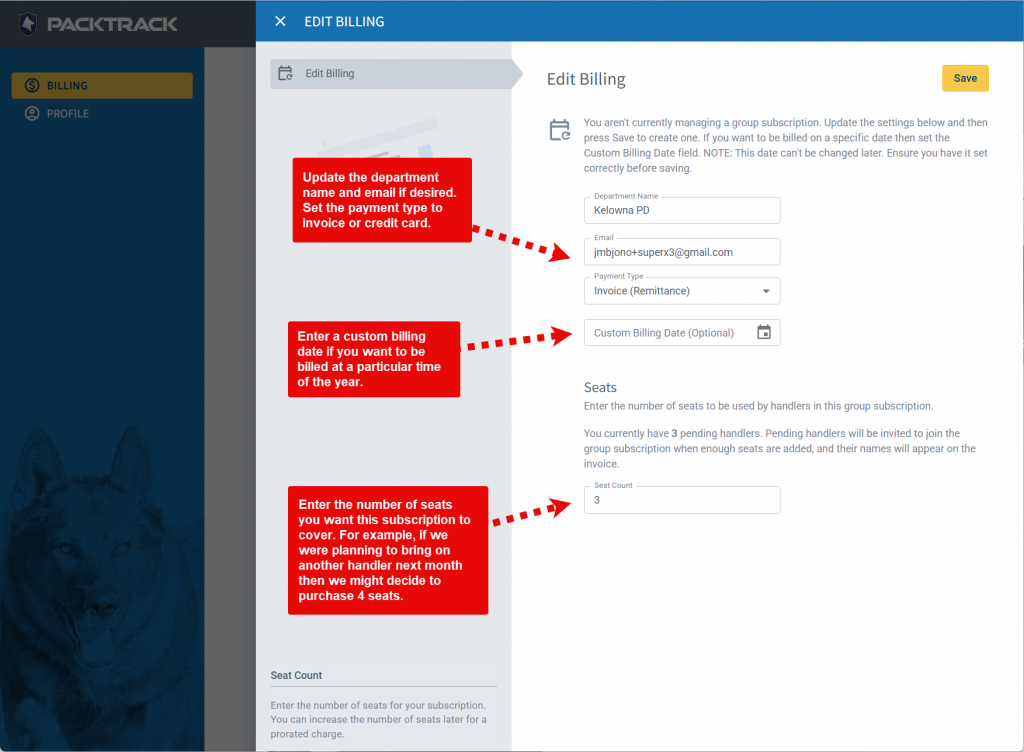
Now that you've identified the handlers that you want to include, you're ready to configure the group subscription. Click the Add Subscription option in the Manage drop down menu to open the billing editor. Adjust the department name and email address if desired, choose the desired payment type (invoice or credit card) and then enter the number of seats that you'd like to purchase. You also have the option of setting a specific billing date. If you want to be billed every year on January 1st then you'd enter that date here.
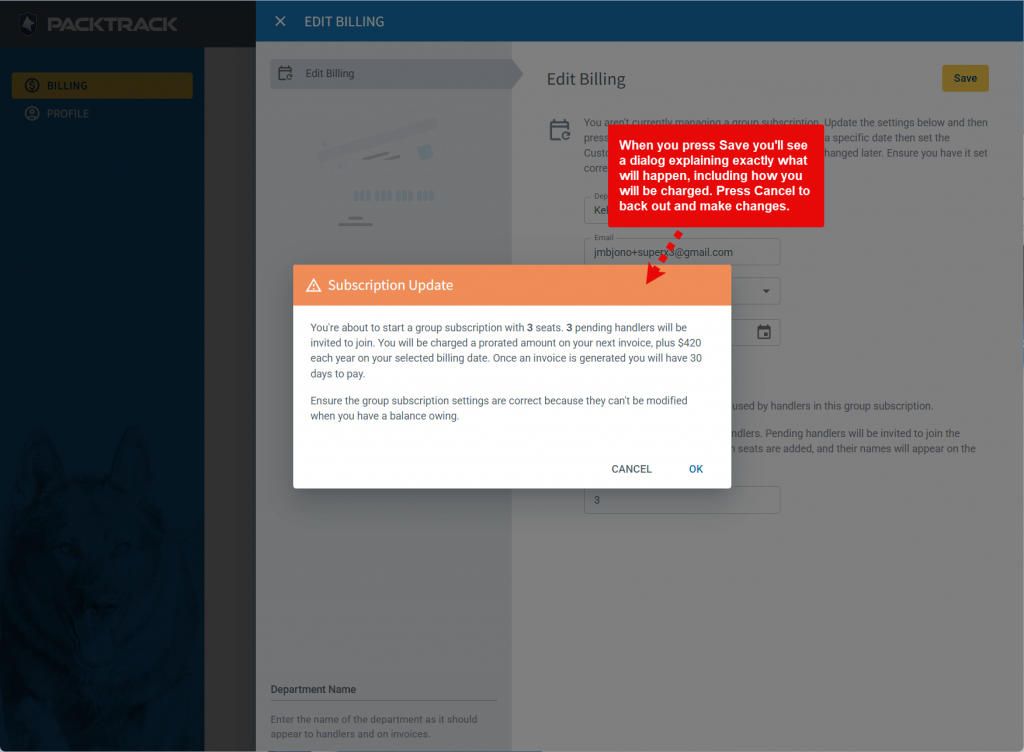
Once you purchase your subscription, the Billing page will update. Pending handlers will occupy the newly available seats and be invited to have their subscription paid for by the billing manager.
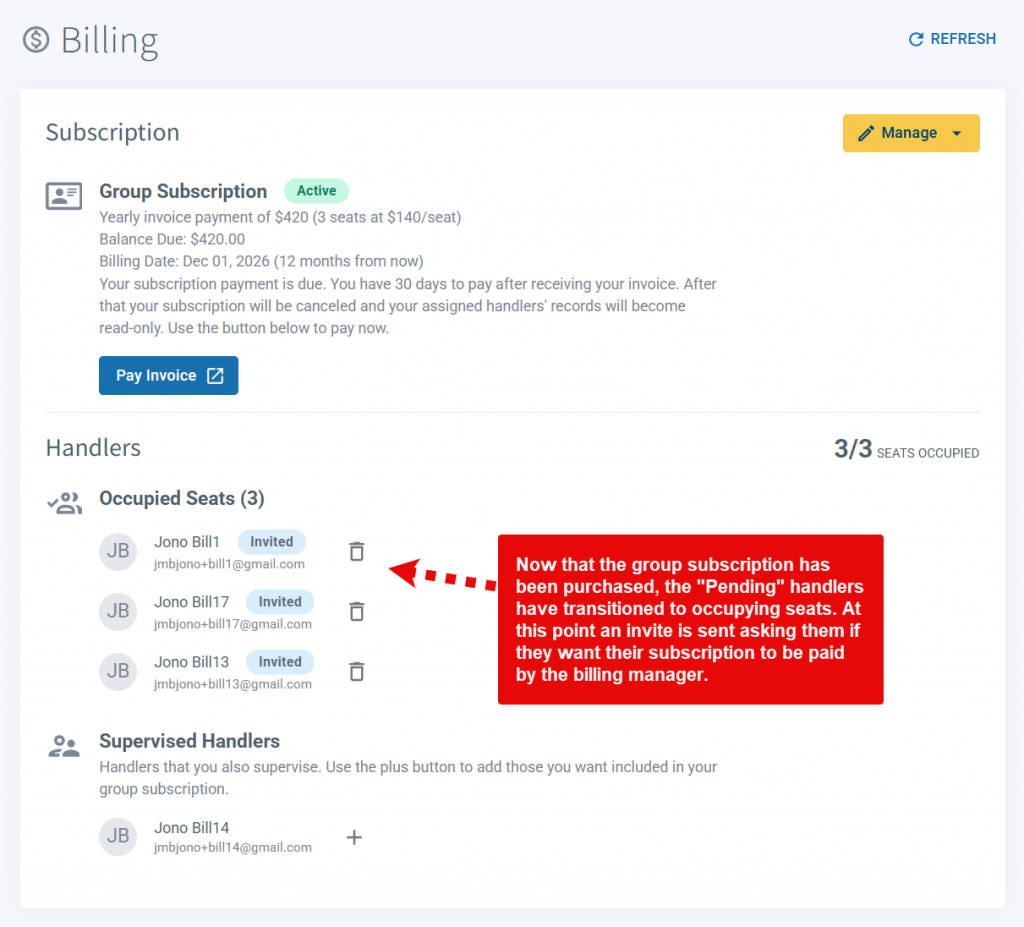
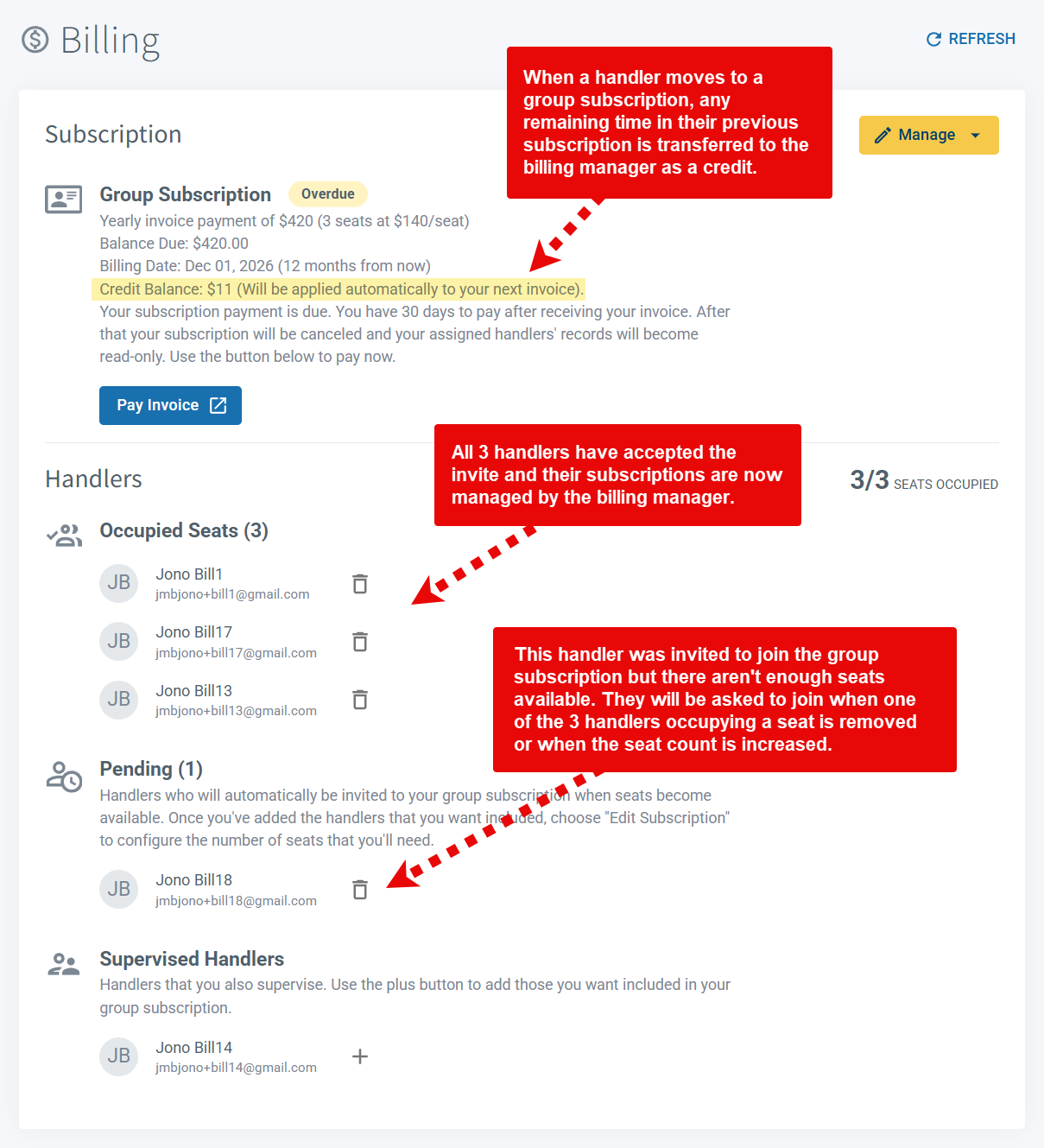
Handlers accept the invite and join the group subscription. Their previous subscription is cancelled. If there is paid time left on the handler's previous subscription then the unused portion will be credited to the billing manager's group subscription.
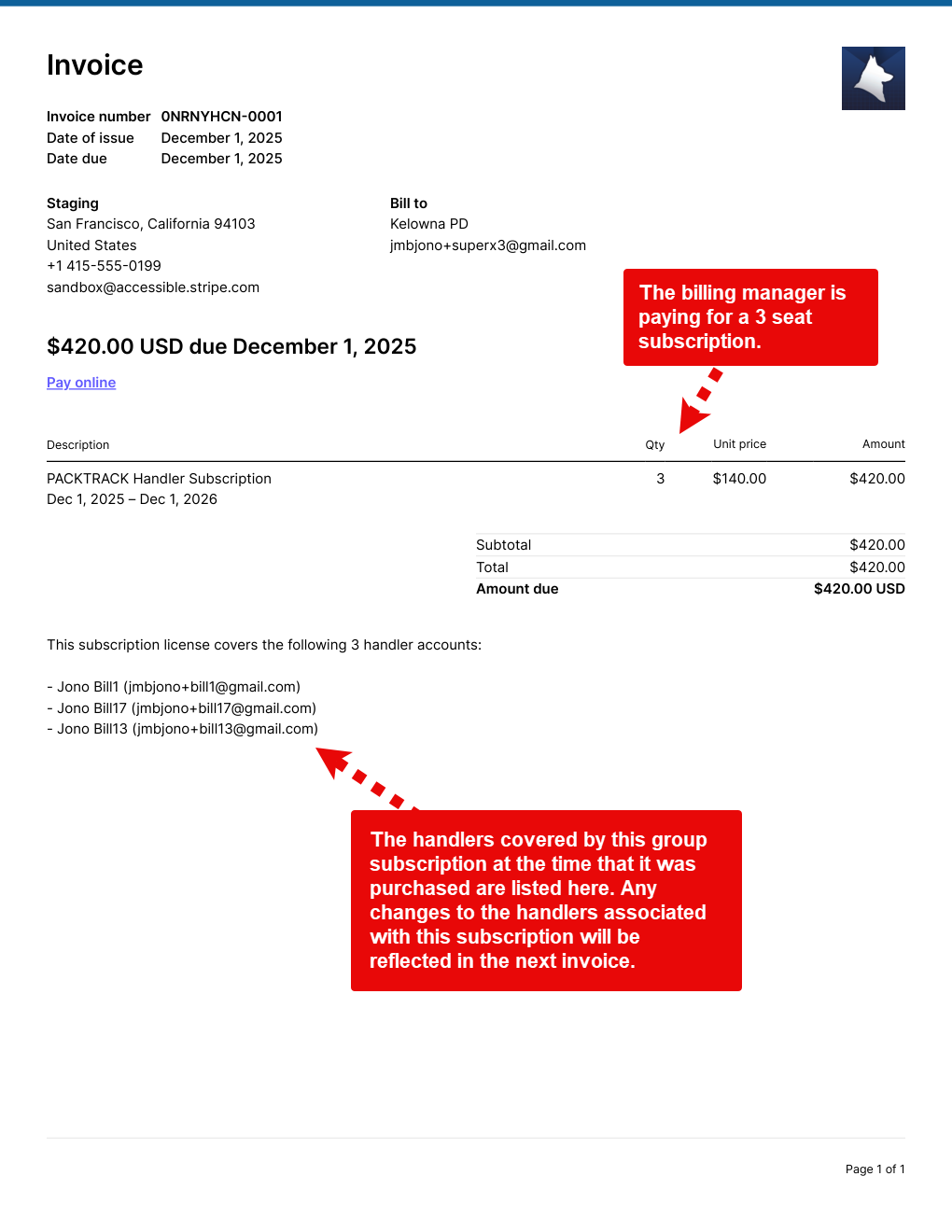
The billing manager receives an invoice based on the number of purchased seats. All handlers who occupy seats are listed on the invoice. This reflects the handlers assigned to this group subscription at the time that it was created. Future changes to the list of handlers will be shown on the invoice which is due at your next billing date.
Step 4: Make changes later
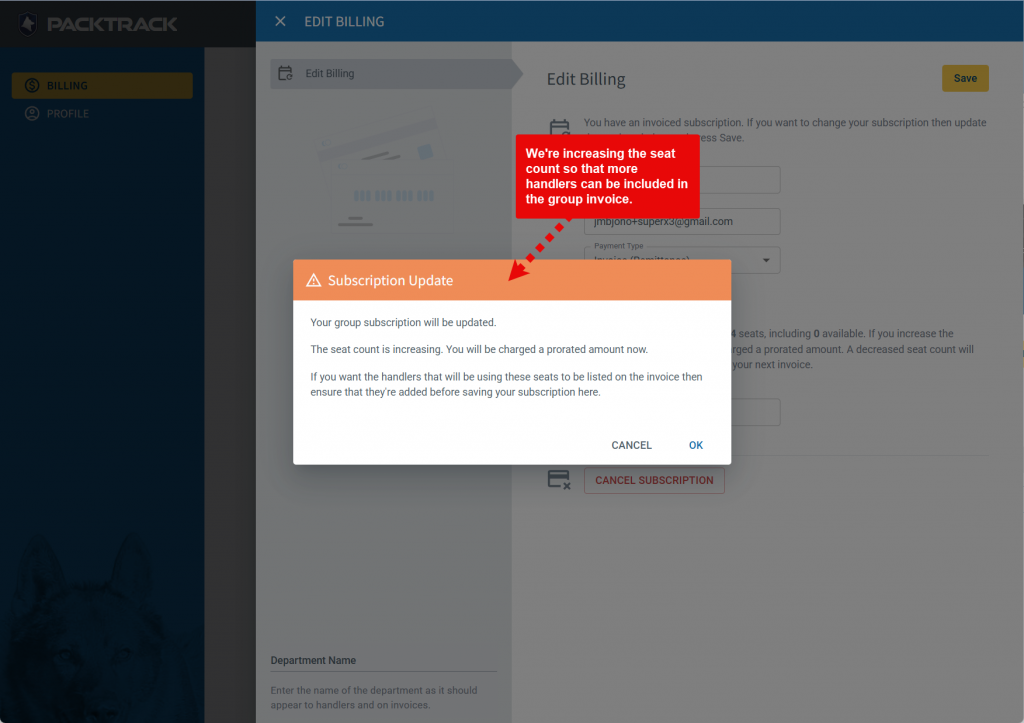
What happens if things change? Perhaps you need to swap out one handler for another or add/remove seats before the next billing date. You can remove assigned handlers using the trash can icon next to their names. Add new ones using the Add Handler option in the Manage drop down menu or select them from the Supervised Handlers list. If you need to adjust the seat count then use the Edit Subscription option in the Manage drop down menu and adjust the Seat Count field up or down. Increasing the count will result in a prorated charge based on the amount of time remaining in your subscription. Decreasing the count will lower the subscription cost shown on your next yearly invoice.
Group subscriptions are all about making life easier for K9 teams and their departments — freeing up more time for what really matters: supporting the dogs and handlers who keep our communities safe. We encourage departments of all sizes to use the group subscription feature to simplify billing. Consider forwarding this page to your department administrator to let them know about this feature. We're constantly updating and improving the PACKTRACK experience and we'd love to hear your feedback.
System Update
0
min read
Single Sign-On Is Here!
The new Sign in with Microsoft feature provides a simple and secure way to sign into PACKTRACK using your Microsoft work account. Note that this feature won't work if you try to sign in using a personal Microsoft account. Instead, select this login option if your department uses single sign-on (SSO) through Microsoft Entra ID (formerly Active Directory). Once configured, you'll be able to login to PACKTRACK using your department email address. This makes logging in easier but it also increases security. This feature works in both the web browser and in the PACKTRACK app (v5.2.0 or above). You must have an active PACKTRACK account. Note that if your department uses SAML technology for single sign-on then that isn't yet supported. Reach out to your IT department to confirm this feature is right for you. They can help you get set up.
The new Sign in with Microsoft feature provides a simple and secure way to sign into PACKTRACK using your Microsoft work account. Note that this feature won't work if you try to sign in using a personal Microsoft account. Instead, select this login option if your department uses single sign-on (SSO) through Microsoft Entra ID (formerly Active Directory). Once configured, you'll be able to login to PACKTRACK using your department email address. This makes logging in easier but it also increases security. This feature works in both the web browser and in the PACKTRACK app (v5.2.0 or above). You must have an active PACKTRACK account. Note that if your department uses SAML technology for single sign-on then that isn't yet supported. Reach out to your IT department to confirm this feature is right for you. They can help you get set up.
Connect Your Microsoft Account
1. Click the Sign in with Microsoft button.
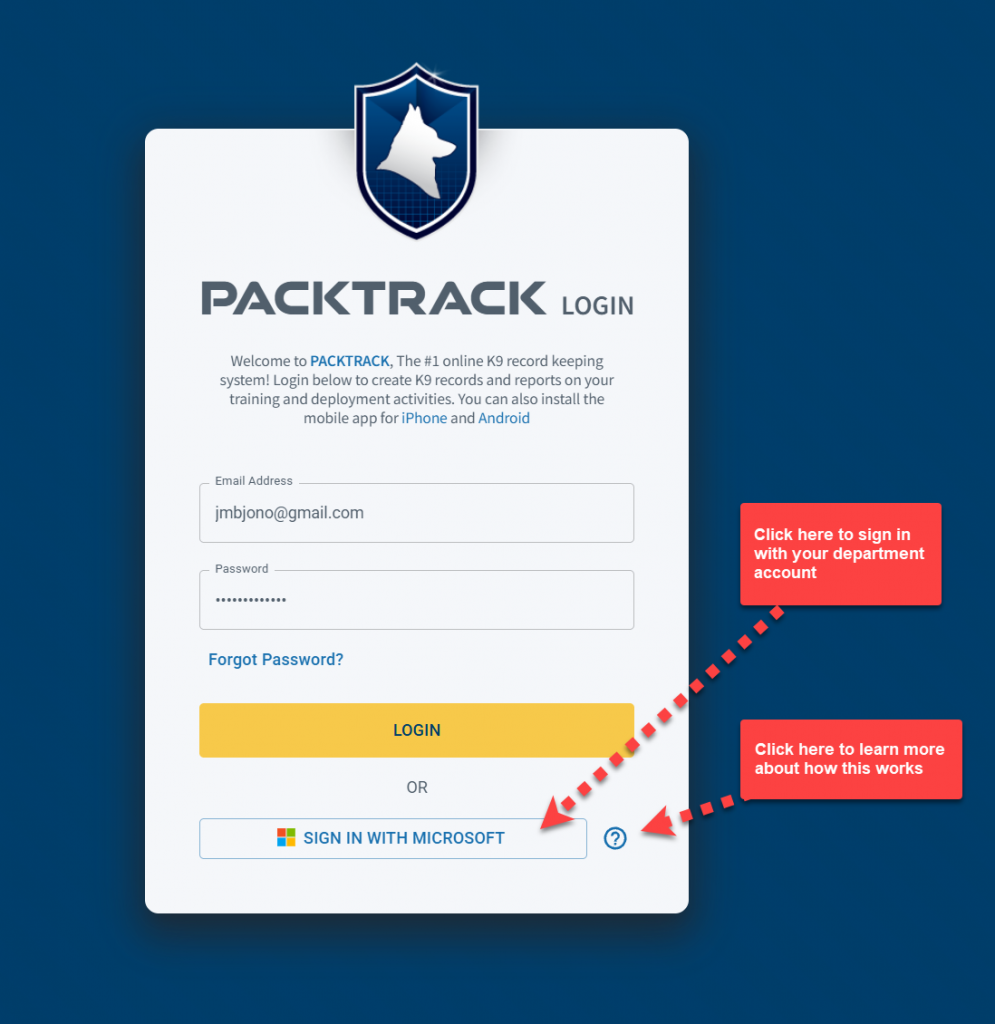
2. Enter your department email and then wait to get redirected to your department login. Once there, type in the department email address and password associated with your Microsoft account or select it from the list. You may also have to verify yourself using 2 factor authentication.
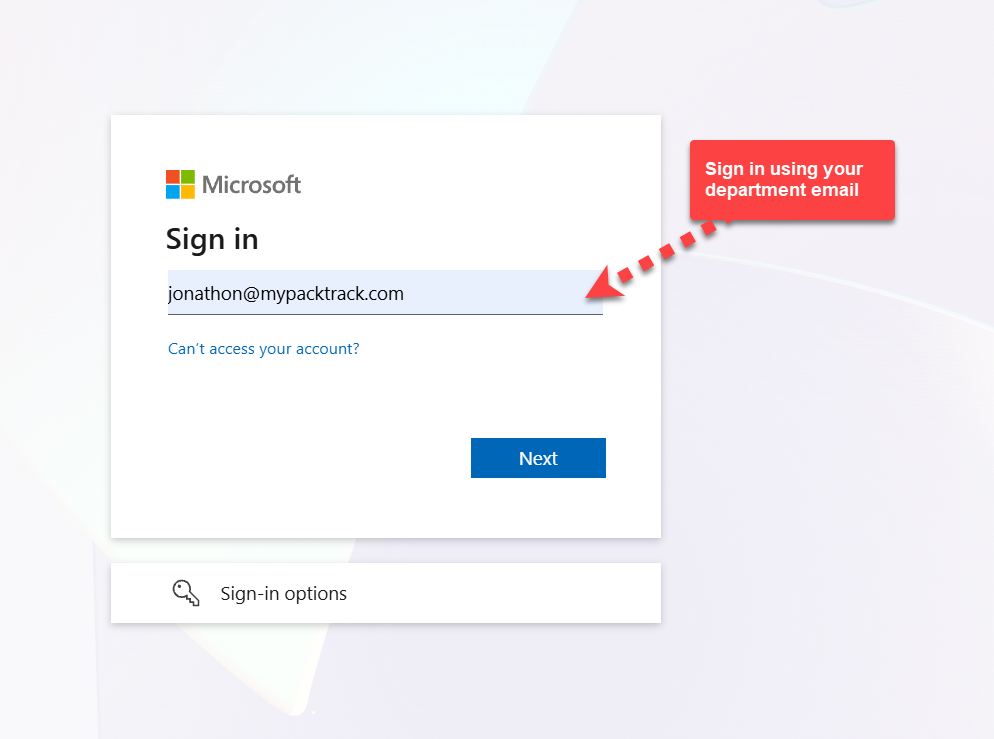
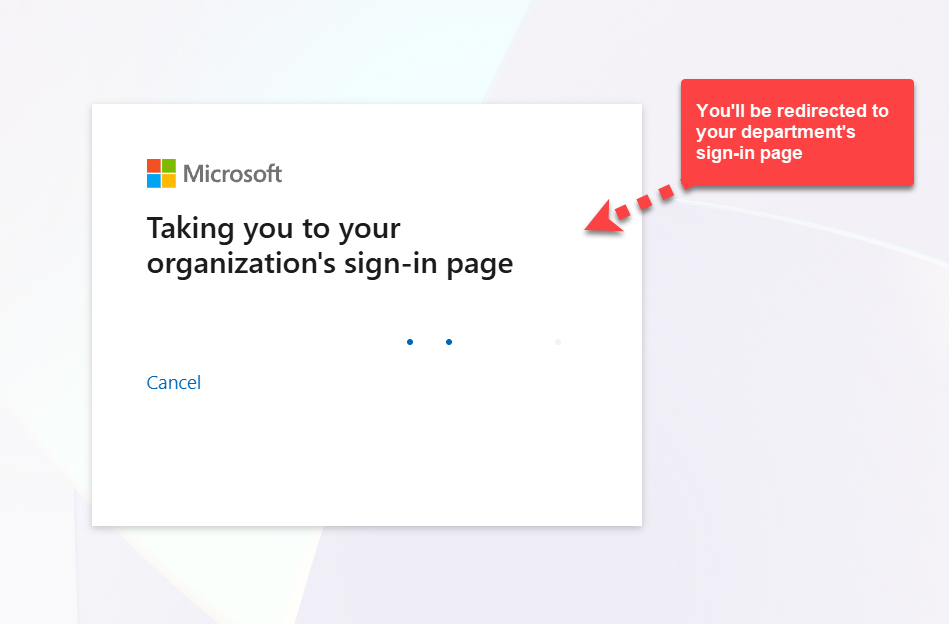
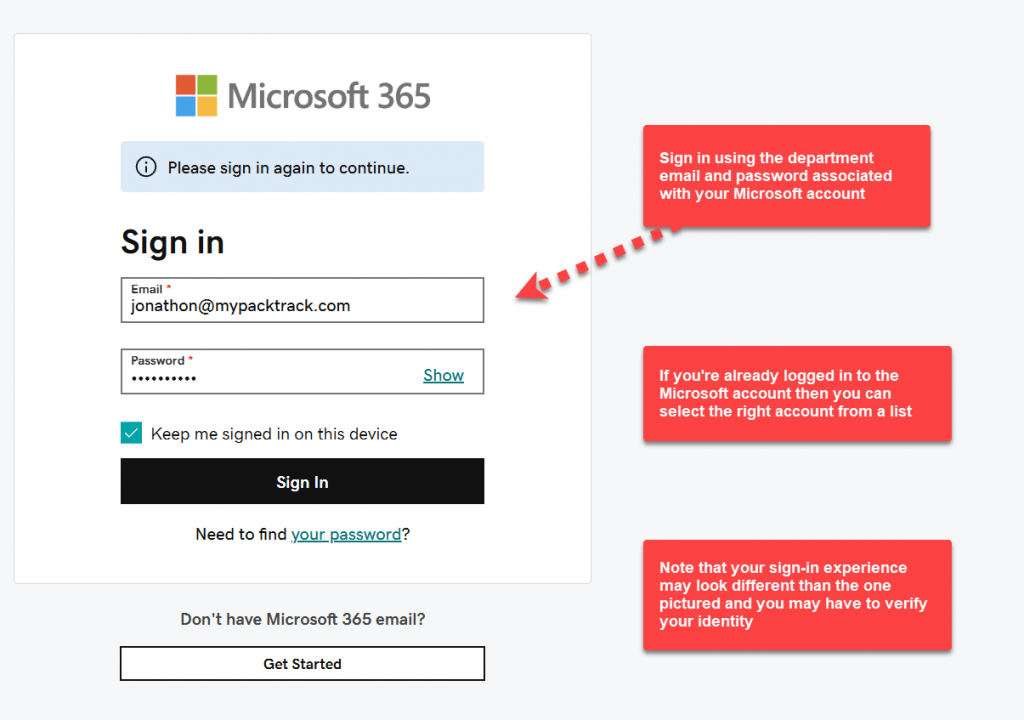
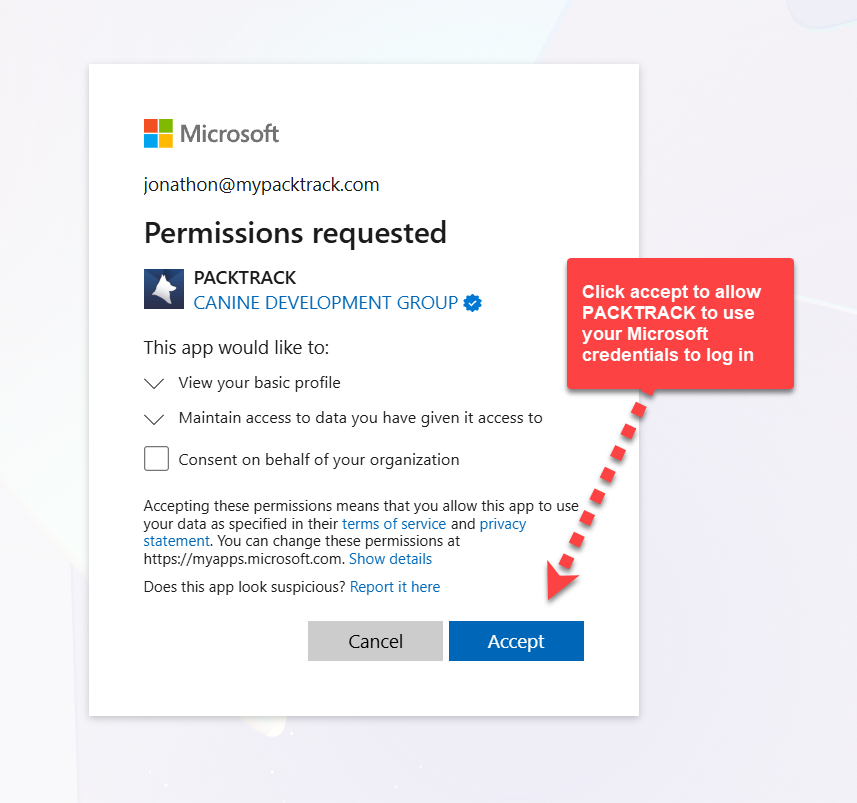
3. Click Accept on the permission screen to allow PACKTRACK to use your Microsoft account credentials to log in.
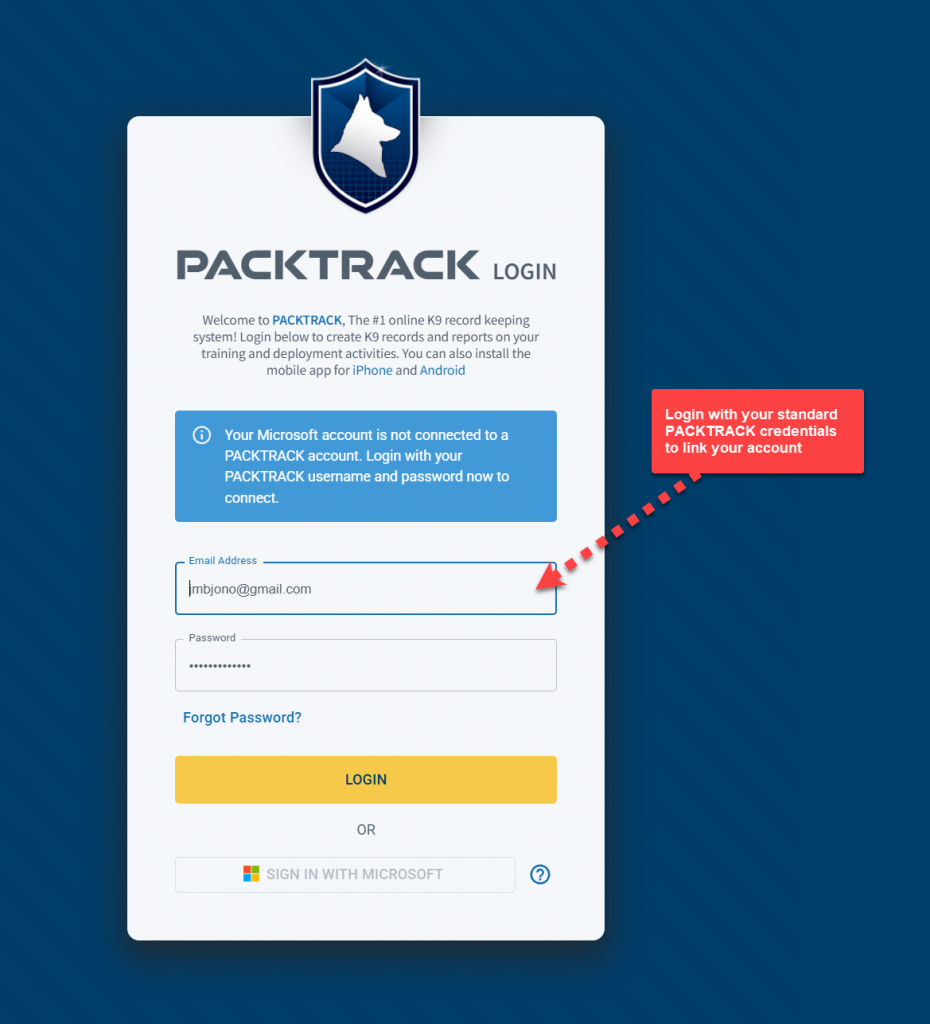
4. You should now be back at the login page and see a note asking you to link your PACKTRACK account. If you don't see this then try reloading the page. Type in your PACKTRACK email address and password.
5. You're all set. The next time you press the Sign in with Microsoft button you'll just need to enter your department credentials. As an alternative, you can also configure Single Sign-On after you're logged in. Simply visit the Microsoft Account option in your Profile page and click the Connect Microsoft Account button.
Disconnect Your Microsoft Account
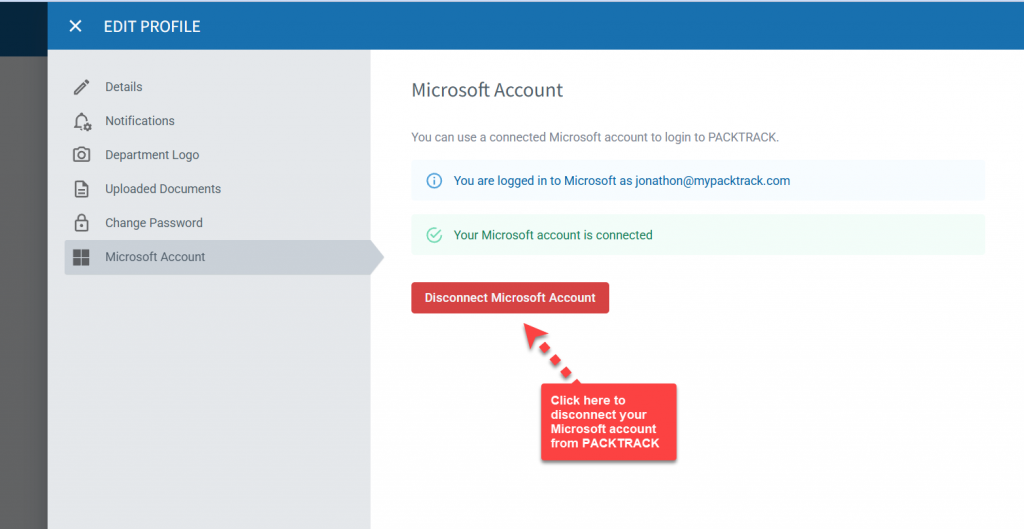
If you connected the wrong account or just want to remove your Microsoft account from PACKTRACK then use the disconnect option. Click the Profile link in the main menu then select the Microsoft Account option. This will open the editor as shown below. Click the Disconnect Microsoft Account button.
Technical Note (For Entra ID administrators only)
In some situations it may be desirable to approve the PACKTRACK app for SSO across all users of your department. This can be especially helpful if there are restrictions on who can add service principals to your Entra ID configuration. Admins that are authorized to consent on behalf of the department can use
THIS LINK to grant tenant-wide admin consent to the PACKTRACK application. Learn More about how this works. When this is complete, the PACKTRACK service principal is added to your Enterprise Applications list in Entra ID. This allows all department users to access the application without explicitly providing consent. Note, however, that they must still link their department credentials to PACKTRACK the first time that they use SSO.